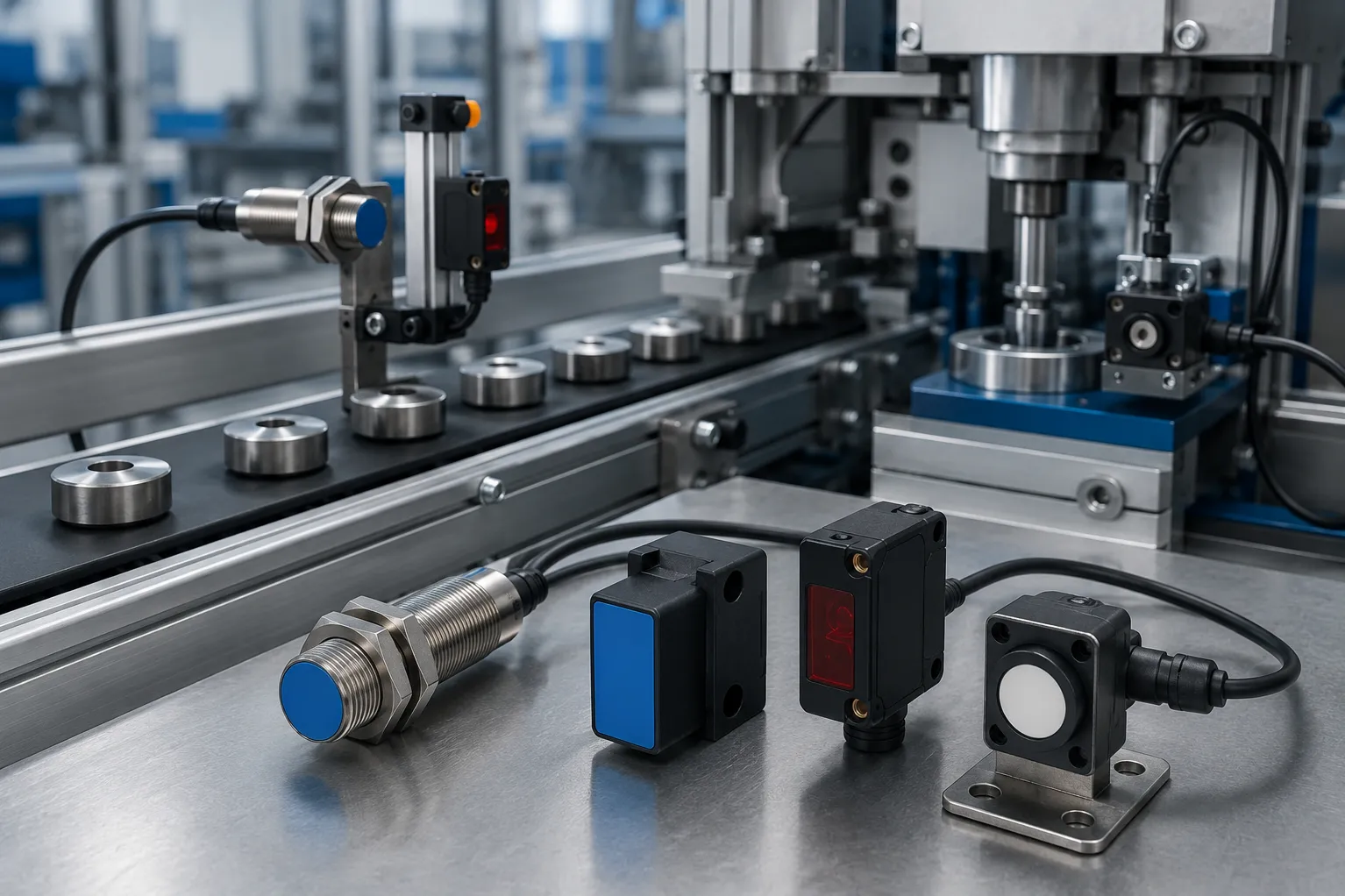
Industrial automation depends on accurate information about what is happening inside a machine or production process. Proximity sensors provide one of the simplest ways to detect an object's presence or position without requiring direct mechanical contact.
When evaluating an Industrial Proximity Sensor Manufacturer, engineers should first understand the sensing technology required by the application. Selecting a sensor purely by dimensions or sensing distance can lead to unreliable detection once it is installed in the actual operating environment.
What Does a Proximity Sensor Do
A proximity sensor detects the presence or approach of an object within its sensing range. Because detection can occur without physical contact, these sensors can reduce mechanical wear associated with conventional contact switches.
They are commonly used for:
- Position detection
- Object counting
- Machine sequencing
- Conveyor monitoring
- End-position sensing
- Packaging equipment
- Assembly automation
- Material handling
- Industrial safety-related detection systems
The correct sensor depends largely on what needs to be detected and under what conditions.
Inductive Sensors for Metallic Objects
Inductive proximity sensors are widely used to detect metal.
They are commonly installed in machine tools, conveyors, automated assembly equipment, and industrial machinery where metal components must be identified without physical contact.
Engineers should consider sensing distance, target material, mounting arrangement, operating voltage, output type, and environmental conditions.
Different metals can also influence effective sensing performance, so the application should be assessed rather than relying solely on the nominal sensing distance.
Capacitive Sensors for Broader Material Detection
Capacitive sensing can be used for certain metallic and non-metallic materials.
Applications can include detecting plastics, powders, liquids, packaging materials, or products through suitable non-metallic surfaces.
Because capacitive sensing can be influenced by surrounding materials and environmental conditions, setup and sensitivity adjustment may be important.
Installation Conditions Affect Performance
Even a correctly specified sensor can perform poorly when installed incorrectly.
Engineers should review:
- Flush or non-flush mounting requirements
- Distance from nearby metal
- Cable routing
- Electrical interference
- Target dimensions
- Sensor orientation
- Temperature
- Moisture and contamination exposure
- Mechanical vibration
Industrial environments around Delhi and neighbouring manufacturing areas can include machinery operating continuously under demanding conditions. Selecting components with appropriate environmental specifications is therefore important.
Verify Electrical Compatibility
A proximity sensor must interface correctly with the control system.
Important electrical details can include supply voltage, PNP or NPN output, normally open or normally closed operation, switching frequency, load current, connector configuration, and cable requirements.
A physically suitable sensor with the wrong electrical output may not integrate correctly with a PLC or control circuit.
Replacement Sensors Require Careful Matching
Maintenance teams frequently need proximity sensors to replace existing units.
In such cases, record the complete model information before removing the old sensor whenever possible. Also note mounting dimensions, sensing distance, output configuration, voltage, connector or cable arrangement, and target material.
This makes it easier to evaluate a technically appropriate replacement.
MAXGTECH works with industrial electronic component requirements for customers in Delhi, including sensing and automation-related applications. For procurement teams, the key is to provide complete operating and specification details instead of requesting a sensor based only on diameter or appearance.
Choose According to the Machine, Not the Catalogue
There is no universally best proximity sensor.
A good selection is one that reliably detects the intended target, integrates with the control system, fits the mechanical installation, and tolerates the surrounding environment.
When comparing an Industrial Proximity Sensor Manufacturer, buyers should therefore evaluate product specifications alongside application understanding and supply capability.
Correct sensor selection can support dependable machine sequencing and reduce unnecessary maintenance interventions, making it a small component with a significant role in industrial automation.
Keywords