Heat is one of the most persistent challenges in electronic equipment. Power supplies, control panels, computing hardware, communication equipment, industrial electronics, and enclosed electrical systems can generate substantial heat during continuous operation.
Selecting a DC Cooling Fan Supplier should therefore begin with thermal requirements rather than simply choosing a fan that fits the available space.
Why Cooling Fan Selection Matters
Electronic components have defined operating temperature limits. Excessive temperature can influence performance and potentially shorten component life.
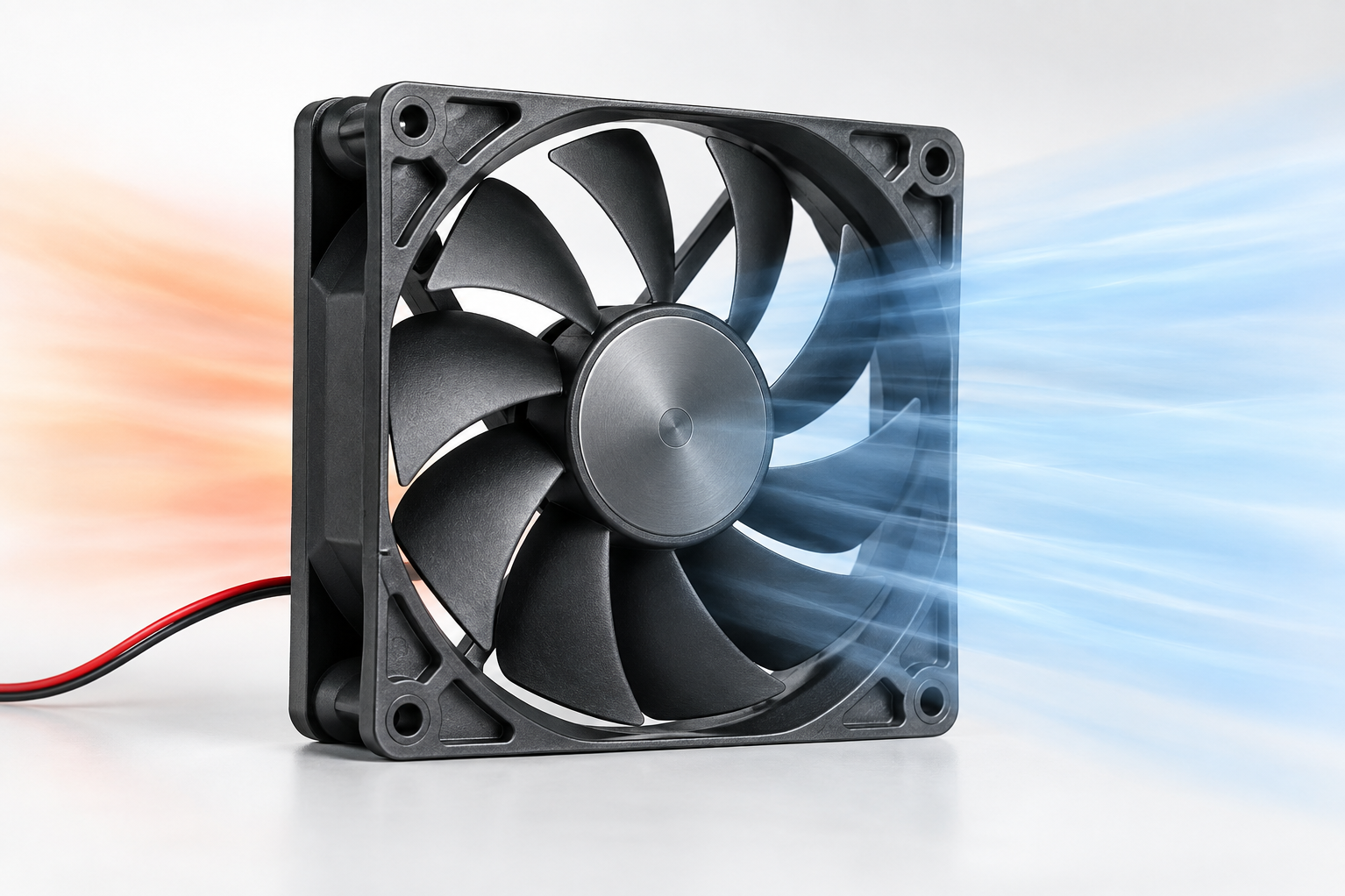
A DC fan helps move air through or across an enclosure so that heat can be transferred away from critical components.
The effectiveness of that cooling depends on airflow path, fan characteristics, enclosure restrictions, ambient conditions, and heat generation.
Airflow Is More Than a Fan Size
Airflow is commonly expressed in units such as cubic feet per minute.
A larger fan may move more air under open conditions, but actual system performance changes when filters, vents, heatsinks, cables, grilles, and enclosure restrictions create resistance.
This is why engineers should consider both airflow and static pressure characteristics.
Equipment with a restrictive airflow path may require a fan capable of maintaining useful airflow against higher resistance.
Voltage Must Match the System
DC cooling fans are available for different supply voltages.
The selected fan should match the equipment's electrical design. Engineers should also consider current consumption, starting characteristics, connector requirements, and control features.
Connecting an unsuitable voltage fan can result in incorrect operation or component damage.
Noise Can Become a Design Requirement
For factory machinery, acoustic noise may be less critical than airflow and durability. For office electronics, laboratory systems, medical environments, or equipment installed near operators, fan noise can become an important design consideration.
Fan speed, bearing technology, blade design, mounting, and airflow turbulence can all affect perceived noise.
Reducing fan speed may lower noise, but engineers need to confirm that sufficient cooling remains available.
Bearing Type Influences Application Suitability
Different bearing systems offer different combinations of cost, noise, orientation flexibility, and operating life.
Rather than choosing by terminology alone, designers should review expected operating hours, ambient temperature, installation orientation, and reliability requirements.
A fan intended for continuously operating industrial equipment may need different characteristics from one used intermittently.
Consider Environmental Conditions
Industrial installations around Delhi and the broader National Capital Region may expose equipment to elevated ambient temperatures, airborne dust, and extended operating periods.
These conditions can influence fan and filter selection.
Where dust ingress is a concern, filtration may protect internal electronics, but filters also increase airflow resistance and require maintenance.
The cooling design should therefore consider the complete enclosure.
Compare Total Thermal Performance
MAXGTECH supplies electronic component categories for B2B requirements in Delhi, including cooling-related components used in electronic and industrial systems. When evaluating any provider, buyers should communicate fan dimensions, voltage, airflow expectations, connector details, quantity, and environmental requirements.
For replacement requirements, recording the full model number and specifications from the existing fan can reduce sourcing errors.
Test Under Real Operating Conditions
Thermal calculations provide a starting point, but final equipment should ideally be tested under realistic load and ambient conditions.
Temperature measurements at critical components can reveal airflow problems that are not obvious from fan specifications alone.
A suitable DC Cooling Fan Supplier can support the procurement side of the process, but correct fan selection ultimately depends on the thermal design of the equipment.
By balancing airflow, pressure capability, noise, electrical compatibility, reliability, and environmental conditions, OEMs can make cooling decisions that support dependable electronic operation.