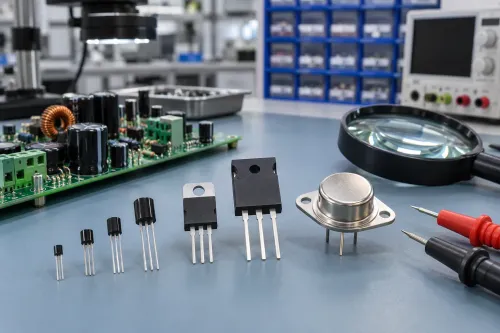

Integrated circuits can control processing, timing, communication, power management, signal conversion, memory, sensing, and numerous other functions within an electronic product. When a critical IC is unavailable or incorrectly sourced, an entire PCB assembly may remain incomplete.
That is why selecting an Integrated Circuit Components Supplier deserves a structured procurement checklist, particularly for OEMs managing recurring production.
Confirm the Complete Part Number
IC families frequently contain multiple variants that differ by package, temperature grade, speed, memory size, voltage, or functionality.
A shortened part number can therefore create ambiguity.
Before requesting a quotation, procurement teams should obtain the complete manufacturer part number from the approved bill of materials.
Verify Package Type
Packages such as SOIC, TSSOP, QFN, BGA, DIP, and others can have different footprints and assembly requirements.
Even when two devices perform similar functions, package differences can prevent direct substitution.
Check both the package designation and the exact dimensions specified in the datasheet.
Review Temperature Requirements
Industrial equipment may operate under conditions very different from consumer electronics.
If the original design requires an industrial temperature grade, replacing it with a device intended for a narrower range can create reliability concerns.
Engineering teams should define the required operating temperature classification before procurement begins.
Check Moisture and Handling Requirements
Certain surface-mount IC packages require controlled handling and storage.
Moisture sensitivity, packaging condition, electrostatic discharge precautions, and storage procedures can become important before PCB assembly.
For production environments, component handling should therefore be considered part of quality control rather than simply a warehouse activity.
Establish Traceability Requirements
OEM procurement teams may need manufacturer identification, lot information, packaging labels, date codes, datasheets, or other supporting information depending on internal quality procedures.
Defining these expectations before ordering prevents confusion during incoming inspection.
Evaluate Supply Continuity
An IC may be available today but difficult to source during the next production cycle.
For products with recurring manufacturing schedules, consider:
- Lifecycle status
- Forecast quantities
- Lead times
- Approved alternatives
- Last-time-buy risks
- Potential redesign implications
Engineering teams should be informed early when a critical component faces availability challenges.
Use Samples Strategically
For a new component source or technically approved alternative, samples can support engineering evaluation before bulk procurement.
Testing may include functional verification, thermal behaviour, assembly compatibility, and system-level performance depending on the application.
Sample approval should not automatically replace incoming quality checks for subsequent production quantities, but it can reduce the risk of committing to an unsuitable part.
Assess Supplier Communication
Component sourcing often becomes difficult when technical information is incomplete.
A useful supplier relationship should support accurate discussion around part numbers, quantities, packaging, availability, and alternatives where applicable.
MAXGTECH serves electronic component requirements for OEMs and industrial buyers in Delhi. Companies assessing IC sourcing options can use the same disciplined supplier qualification process they apply to other strategically important components.
Build a Procurement Checklist Into Every RFQ
Before sending an IC requirement, confirm:
- Complete part number
- Manufacturer preference
- Package
- Quantity
- Temperature grade
- Required documentation
- Delivery schedule
- Whether alternatives are acceptable
- Forecast requirement
- Internal approval status
Delhi's electronics market offers broad sourcing opportunities, but availability alone does not establish suitability.
A dependable Integrated Circuit Components Supplier should be evaluated on how effectively the sourcing process aligns with engineering requirements, quality procedures, and production schedules.
For procurement managers, this checklist creates a repeatable way to reduce avoidable errors and make IC purchasing more predictable.
Keywords