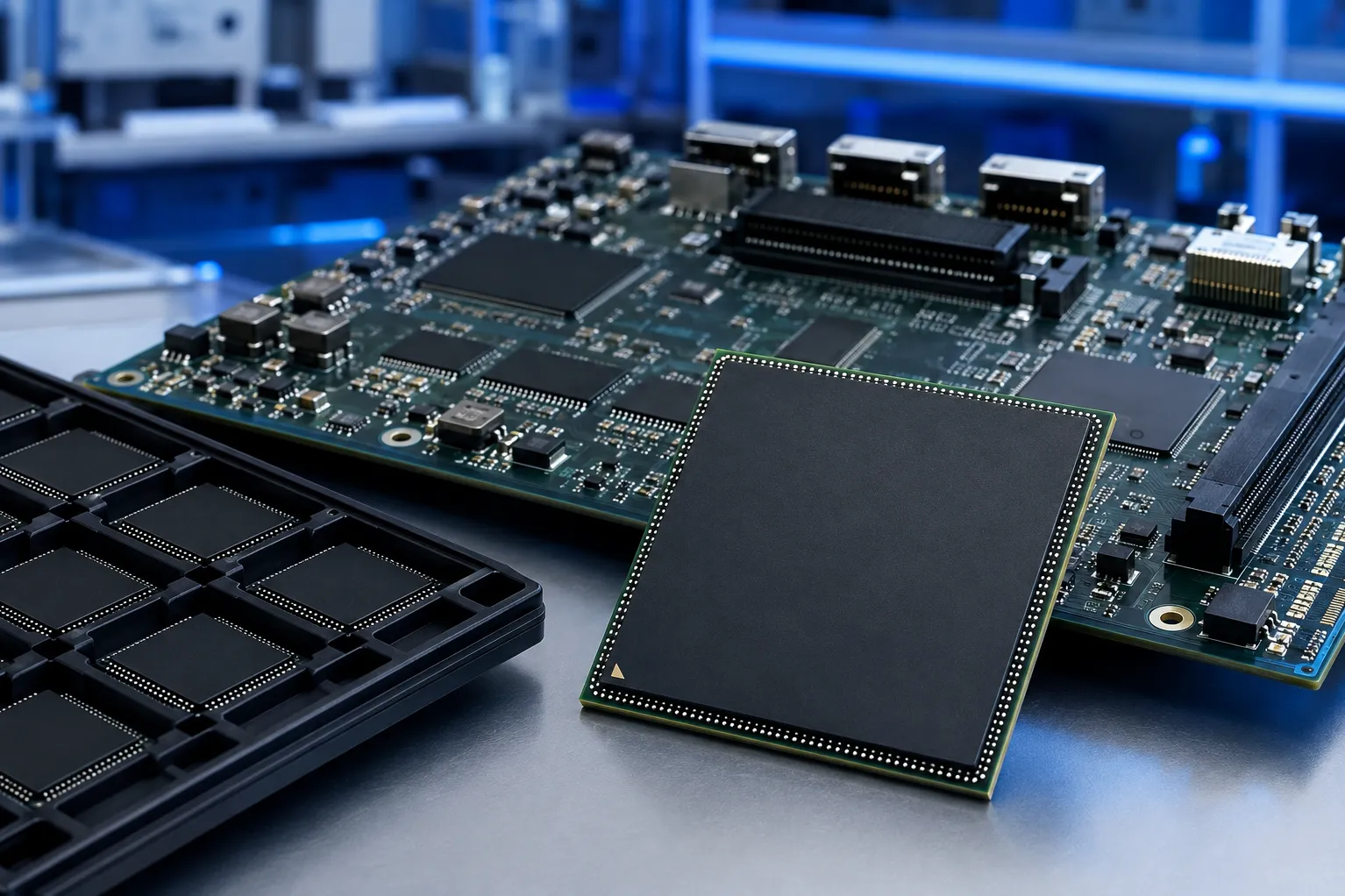
Modern electronic systems increasingly require hardware that can perform specialised processing without relying entirely on fixed-function circuitry. Field-programmable gate arrays, commonly known as FPGAs, provide this flexibility by allowing engineers to configure digital logic according to application requirements.
Choosing an experienced FPGA Components Supplier therefore involves more than finding a device with sufficient logic capacity. Engineers and procurement teams need to consider architecture, interfaces, speed, power, package compatibility, development requirements, and long-term availability.
Where FPGAs Are Commonly Used
FPGAs can be useful where systems require parallel processing, deterministic response, custom interfaces, or hardware-level control.
Applications may include:
- Industrial automation
- Communication equipment
- Signal processing
- Test and measurement systems
- Machine control
- Video processing
- Embedded computing
- Data acquisition
- High-speed interface applications
Unlike a fixed-function integrated circuit, an FPGA can be configured for application-specific logic. This flexibility is one reason these devices are used in sophisticated electronic designs.
Logic Capacity Is Only One Selection Factor
Engineers sometimes begin FPGA selection by comparing logic resources, but several additional characteristics influence suitability.
Depending on the design, teams may need to examine:
- Logic elements
- Embedded memory
- DSP resources
- I/O availability
- Transceiver capability
- Clocking resources
- Supported interfaces
- Operating frequency
- Power consumption
- Package dimensions
- Temperature rating
Selecting excessive capacity can unnecessarily increase cost or power requirements, while insufficient resources can restrict future design development.
Consider the Development Ecosystem
An FPGA does not operate independently of its development environment.
Engineering teams should consider whether the device is supported by appropriate design tools, programming hardware, libraries, reference designs, and internal development expertise.
Changing FPGA families during a mature project can require significant engineering effort because the design may depend on device-specific resources or software.
For this reason, component availability should be considered early rather than after development is complete.
Package and PCB Requirements Matter
High-density FPGA packages can influence PCB complexity.
More sophisticated devices may require multilayer boards, controlled impedance routing, careful power distribution, and detailed thermal management. Engineers should evaluate these implications during component selection rather than treating the FPGA as an isolated purchase.
For replacement requirements, package compatibility becomes even more important. A technically similar FPGA may not provide a practical substitute if the footprint or pin configuration differs.
Procurement Teams Should Plan for Lifecycle Risk
FPGAs are frequently used in products with long development and operational cycles. Industrial equipment, for example, may remain in production or service for many years.
Procurement planning should therefore examine:
- Device lifecycle status
- Availability
- Lead time
- Repeat supply potential
- Approved alternatives
- Production forecasts
Maintaining communication between engineering and purchasing teams helps prevent situations where a technically successful design becomes difficult to manufacture because a critical FPGA cannot be sourced consistently.
Delhi Buyers Need Technical and Commercial Alignment
Electronics manufacturers and industrial companies in Delhi and the wider Delhi NCR market often source components for prototypes, production runs, maintenance, and system upgrades.
MAXGTECH supplies electronic component categories for B2B applications and can be considered by organisations evaluating FPGA and related component requirements. As with any technically critical component, buyers should verify exact device specifications and suitability for their application before procurement.
Ask the Right Questions Before Ordering
Before placing an FPGA requirement, prepare the complete part number and confirm the package, speed grade, temperature grade, quantity, and expected delivery requirement.
Engineering teams should also specify whether an exact device is mandatory or whether technically compatible alternatives can be evaluated.
An effective FPGA Components Supplier should fit into this structured sourcing process by supporting accurate identification and dependable procurement.
For complex electronics, the FPGA often represents a strategically important part of the design. Giving its sourcing process the same attention as its engineering selection can help OEMs reduce redesign risk and maintain more predictable production schedules.
Keywords