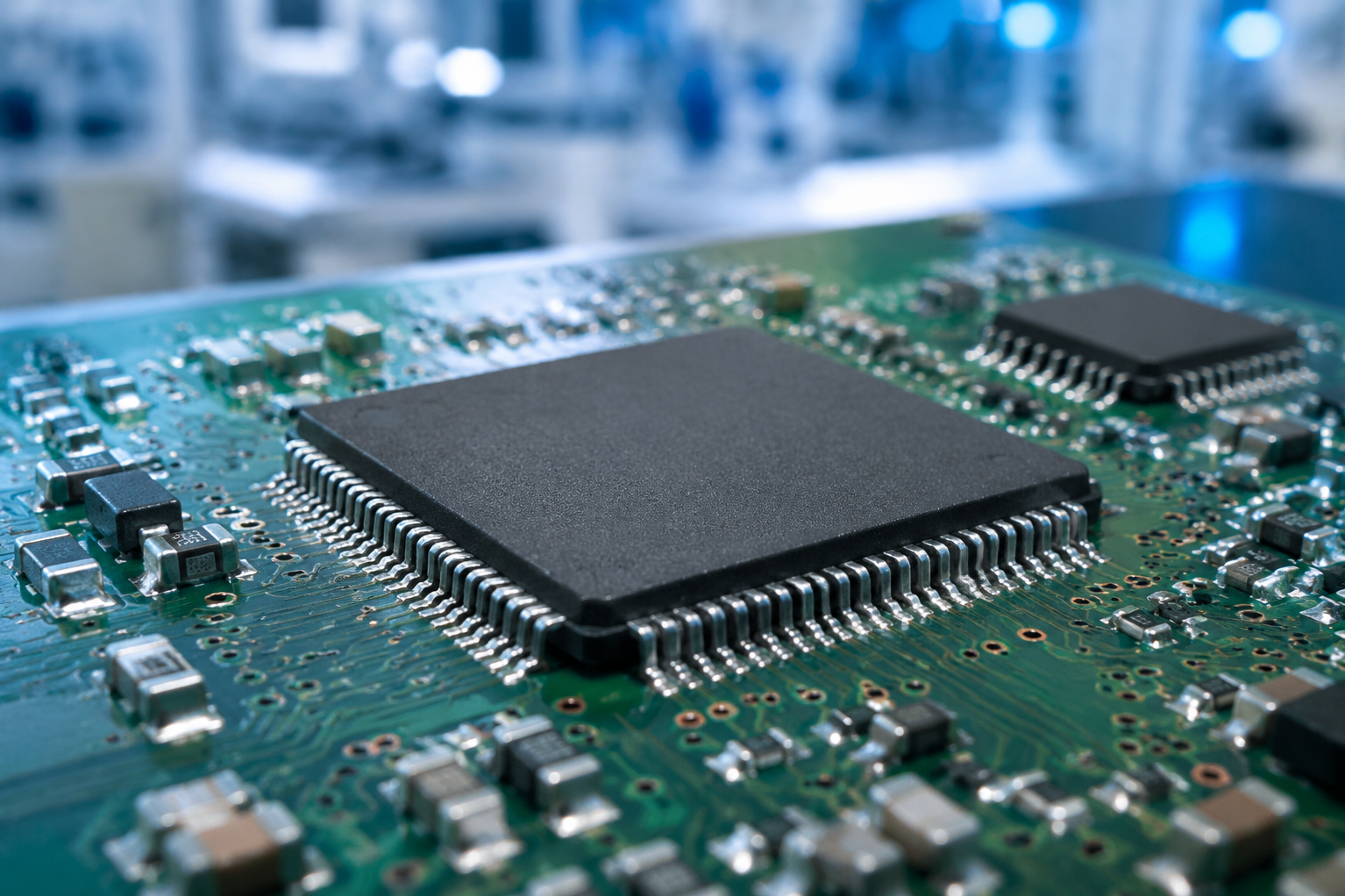
Integrated circuits are at the heart of modern electronic systems. From industrial controllers and communication equipment to embedded devices and automation products, ICs perform essential processing, switching, timing, memory and control functions within compact semiconductor packages.
For electronics manufacturers, OEMs, R&D teams and procurement professionals sourcing integrated circuits in Delhi, selecting the correct IC involves much more than matching a familiar part number.
Start with the Exact Application Requirement
Integrated circuits are designed for specific functions. Before beginning procurement, the engineering team should clearly establish what the IC is expected to perform within the circuit.
Common IC categories include:
- Microcontrollers
- Operational amplifiers
- Logic ICs
- Voltage regulators
- Interface ICs
- Memory devices
- Driver ICs
- Power management ICs
- Communication ICs
- Programmable logic devices
Understanding the application makes it easier to narrow down suitable components and avoid inappropriate substitutions.
Check the Electrical Specifications Carefully
Two integrated circuits with similar functions are not necessarily interchangeable.
Important parameters may include:
- Operating voltage
- Supply current
- Input and output characteristics
- Operating frequency
- Temperature range
- Power consumption
- Number of channels
- Communication interface
- Timing characteristics
Engineers should compare these specifications against the requirements of the actual circuit rather than relying only on a general component description.
Verify the Package and Pin Configuration
Package compatibility is particularly important for PCB-based production.
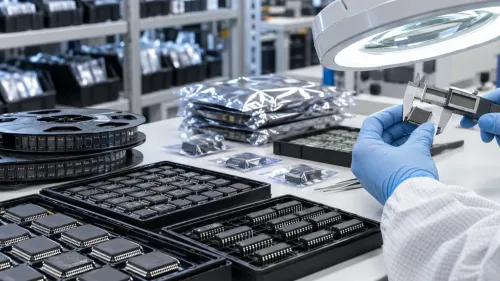
Integrated circuits may be available in different packages, including surface-mount and through-hole configurations. Even devices from the same product family may have different pin counts or physical dimensions.
Before procurement, verify the package designation, pin configuration and PCB footprint.
This becomes especially important when an IC is being purchased as a replacement for an existing production design.
Evaluate Component Consistency for Production
Prototype requirements and recurring production requirements should be approached differently.
A component that works successfully during prototyping should ideally remain consistent when the design moves into regular manufacturing.
Electronics manufacturers should therefore consider:
- Specification consistency
- Package availability
- Component identification
- Production quantity requirements
- Long-term application suitability
Unplanned component changes can lead to PCB revisions, additional testing or production delays.
Integrated Circuit Requirements Across Delhi NCR
Delhi and the wider Delhi NCR region support electronics manufacturing, industrial automation, instrumentation, embedded system development and equipment manufacturing businesses.
MAXGTECH serves electronic component requirements in Delhi, including integrated circuits for different electronic and industrial applications.
For procurement teams, providing the exact part number, package, quantity and intended application can make the sourcing and technical evaluation process more efficient.
Choose Integrated Circuits with Production in Mind
The right integrated circuit should satisfy both immediate circuit requirements and practical manufacturing considerations.
Before finalizing an IC, verify its electrical specifications, package, pin configuration, operating conditions and compatibility with the overall design.
For manufacturers and OEMs in Delhi, a disciplined IC procurement process helps reduce substitution problems and supports greater consistency from prototype development through regular production.