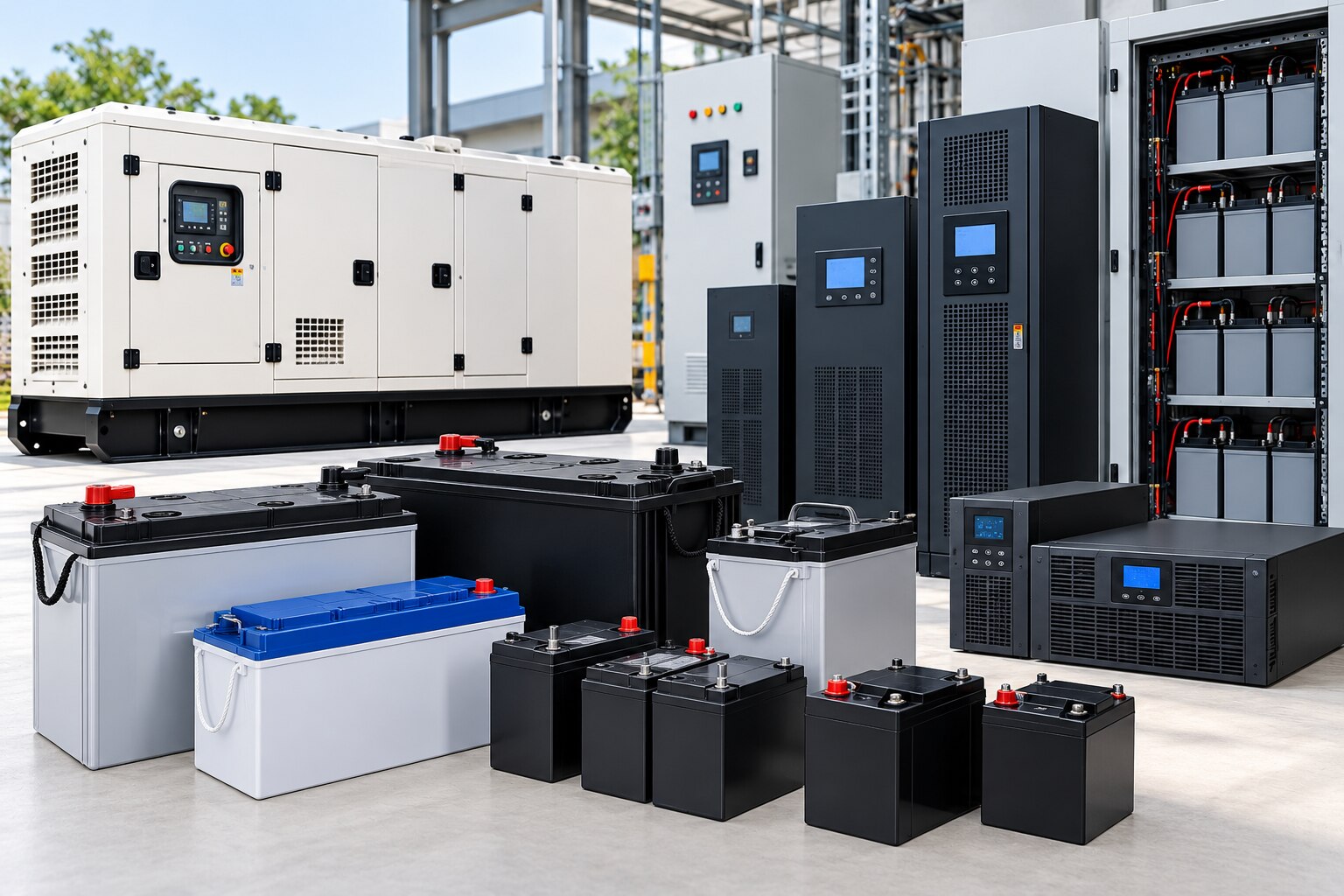
A battery quote that lists only voltage and ampere-hours leaves critical design questions unanswered: runtime at the actual load, performance in Delhi heat, charging compatibility, installation protection and end-of-life responsibility. By the end, you will be able to specify the battery system your equipment needs and assess whether a supplier can support production, commissioning and warranty obligations.
Key takeaways
- Specify chemistry and duty rating before comparing battery prices.
- Calculate usable capacity at the actual load and discharge rate.
- Include temperature, charging, enclosure and protection requirements in the specification.
- Request traceability, test data and configuration control from your supplier.
Why a dedicated battery supplier adds value beyond local stock
A dedicated supplier contributes engineering data, configuration control and commissioning support—not just cartons of batteries. The battery supplier benefits for equipment manufacturers in Delhi include matching the battery system to the product’s DC bus, autonomy target, discharge rate, enclosure and protection scheme.
A quote limited to ampere-hours is incomplete. Ask the supplier to confirm:
- Nominal voltage and acceptable charging range
- Discharge curves at the required autonomy, cutoff voltage and temperature
- Ageing allowance and expected end-of-life capacity
- Dimensions, terminal position, rack fit and cable routing
- Fuse or breaker rating, interconnect layout and terminal torque
- String configuration and matched-set requirements for parallel banks
This information prevents a battery that fits the cabinet but fails to deliver the specified runtime. It also exposes current hogging, unequal charging and premature string failure before production approval.
A dedicated industrial battery supplier in Delhi can provide sample testing, factory records, batch matching and commissioning checks. Local stock improves urgent replenishment, but aged inventory, restricted model choice and unapproved substitutions can undermine reliability; qualify a local source alongside an approved alternate for planned production.
The supplier should also review the charger settings, ventilation, temperature limits and service access. VRLA still needs charging and thermal control, while flooded batteries require water checks, hydrogen ventilation and spill protection. That design input reduces warranty disputes and field failures.
Choose chemistry and duty rating before comparing prices
A low price cannot rescue the wrong duty profile. A battery specified for occasional float standby will deteriorate quickly in an inverter that cycles every day, while a high-cycle battery can add unnecessary cost to a telecom backup that rarely discharges.
| Chemistry | Best-fit duty rating | Check before approval |
|---|---|---|
| VRLA AGM | High-rate UPS and occasional standby | Confirm discharge curves and heat tolerance |
| VRLA gel | Float standby where sealed construction matters | Verify charger voltage and recharge limits |
| Flooded lead-acid or tubular | Frequent cycling, inverter systems, longer autonomy | Provide ventilation, watering access and spill control |
| OPzS or OPzV | Stationary telecom and industrial duty | Match rack dimensions, maintenance plan and cycle requirement |
| Lithium iron phosphate | Frequent cycling, compact systems and long service life | Confirm battery-management-system limits, charger compatibility and fire protection |
A buyer searching for batteries for equipment manufacturers india still needs a defined specification: nominal DC bus voltage, standby or cyclic service, required cycle count, autonomy period, ambient temperature and end-of-discharge voltage.
Ask for the manufacturer’s discharge curve at the actual discharge rate, temperature and cutoff; a 20-hour lead-acid rating will overstate usable capacity in a high-rate UPS.
For repeated deep discharges, compare tubular lead-acid, OPzS or OPzV with lithium iron phosphate rather than standard VRLA. For occasional standby, AGM or another correctly rated VRLA battery can be the practical choice. Reject any quotation that states only ampere-hours without duty rating, terminal-voltage limits and physical dimensions.
Calculate usable capacity from the real load and discharge rate
A 10 kW load needing four hours of backup requires 40 kWh at the AC output, not a 40 kWh battery nameplate. Measure the real load during operation; use power factor to check inverter VA capacity, but calculate battery energy from watts.
Use this calculation:
- DC energy required = load watts × autonomy hours ÷ inverter or UPS efficiency.
- Bank capacity at the bus = DC energy required ÷ DC bus voltage.
- Adjust for temperature, ageing and the battery’s permitted end-of-discharge voltage.
- Replace the nominal ampere-hour figure with the manufacturer’s delivered-capacity value at the actual discharge rate.
A practical formula is: required Ah = watts × hours ÷ (bus volts × efficiency × temperature factor × ageing factor × rate factor). Treat each factor as a decimal, such as 0.80, and obtain the rate factor from the discharge curve at the required autonomy period, cutoff voltage and operating temperature.
A lead-acid battery rated at a 20-hour rate will deliver less capacity during a one-hour UPS discharge. Two batteries with identical Ah labels can therefore provide different runtime. Ask for curves showing terminal voltage and delivered Ah, not only the label.
For backup power batteries in delhi, test the design at the highest expected ambient temperature and the lowest permitted DC cutoff. Add parallel strings only after checking current sharing, fusing, cable voltage drop, recharge time and the manufacturer’s ageing allowance.
Make temperature, charging and physical integration part of the specification
Approve a battery only after its operating environment, charger settings and mechanical interfaces match the production equipment. Use 25°C as the lead-acid reference point; sustained temperatures above it accelerate ageing, with service life approximately halving for each 10°C rise. Delhi enclosures need a thermal design, not just a battery label.
| Specification area | Confirm before approval | Failure if mismatched |
|---|---|---|
| Environment | Operating and storage temperature, ventilation, humidity, clearance, and whether flooded cells need hydrogen extraction, water access and spill control | Heat accelerates corrosion and water loss; sealed enclosures can accumulate heat or hydrogen |
| Charger | Chemistry, series voltage, float and boost voltage, temperature compensation, current limit, recharge time, low-voltage cutoff and lithium BMS communication | Incorrect voltage causes undercharge, swelling, shortened life or a BMS shutdown |
| Physical integration | Rack or cabinet, terminal orientation, torque values, cable lengths, connectors, DC isolator, fuses, breaker ratings and service clearances | Forced wiring, loose terminals and inadequate protection create hot joints or unsafe fault currents |
For parallel strings, specify the number of strings, interconnect layout, matched-set requirement and current-sharing method. Unequal resistance makes one string carry more current, charge unevenly and fail early.
Request interface drawings before purchase, including CAN or RS485 pinouts and alarm mapping. A standard battery package reduces assembly variation, but a proprietary protocol or fixed enclosure dimension can lock every future equipment model to one supplier.
Turn supplier selection into a controlled OEM supply decision
Approve the supplier only after the battery package passes a documented gate. A low quote is not comparable if it omits ageing, commissioning, replacement and transport responsibilities.
1. Request the technical file: datasheet with nominal voltage, capacity at a stated discharge rate, float and boost limits, operating temperature, dimensions and mass; cell or pack model numbers; BMS communication map; rack drawings; cable sizes; fuse or breaker ratings; and installation instructions.
For lithium batteries, require IEC 62619 evidence and the UN 38.3 transport test summary.
2. Define acceptance tests before purchase. Require serial-number and batch traceability, manufacturing date, open-circuit voltage, internal-resistance or conductance readings, insulation checks, and a capacity test at the specified discharge rate. Test parallel strings as complete matched sets; unequal resistance causes current hogging and early failure.
3. Write the warranty around measurable outcomes: calendar duration, cycle limit, minimum retained capacity, end-of-life threshold, start date, prorating formula, exclusions, and replacement freight. State whether the supplier replaces one failed module or the complete matched string.
4. Set service controls: FIFO stock rotation, quarantine for damaged or aged units, commissioning records, response and replacement times, approved substitutes, and an RMA process. Ask MAXGTECH to document these controls rather than accepting “local support” as a promise.
For production, freeze the approved part number, interface drawing and firmware before release. If you buy industrial batteries in Delhi, retain an approved alternate, but prohibit substitutions until the alternate passes the same tests.
Frequently asked questions
Why use a dedicated battery supplier instead of buying local stock?
A dedicated supplier adds engineering data, configuration control and commissioning support while matching batteries to your DC bus, autonomy target, discharge rate and enclosure.
How should equipment manufacturers choose battery chemistry and duty rating?
Choose chemistry and duty rating from the product’s duty cycle, autonomy requirement, recharge method, operating environment and maintenance plan before comparing prices.
How do you calculate usable battery capacity for backup equipment?
Start with the real DC load and required runtime, then account for discharge rate, inverter losses, temperature, ageing allowance and the battery’s specified end voltage.
What should a battery specification include for OEM equipment?
State temperature limits, charging voltage and current, protection settings, dimensions, terminals, mounting, ventilation, connectors, documentation and required traceability.
Keywords