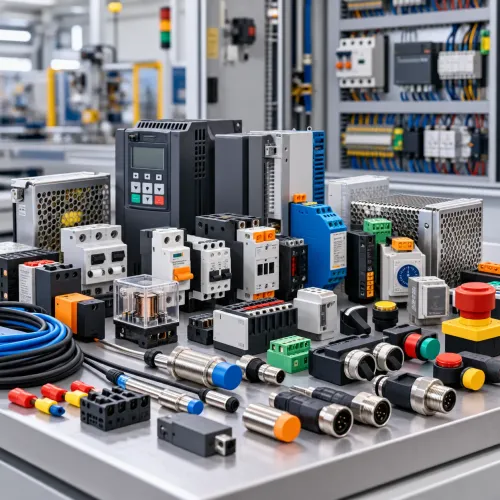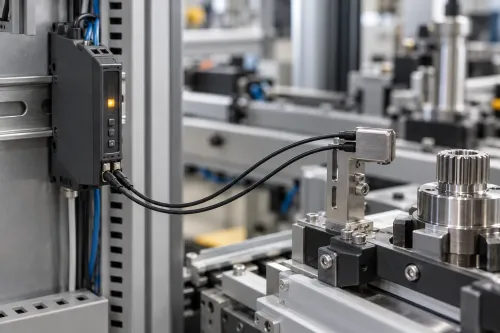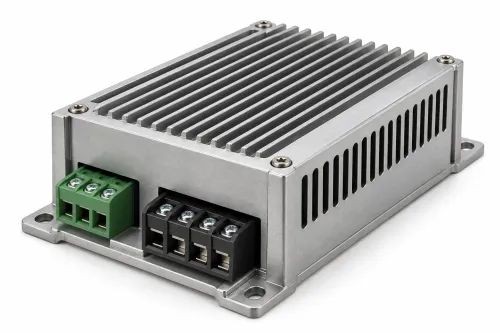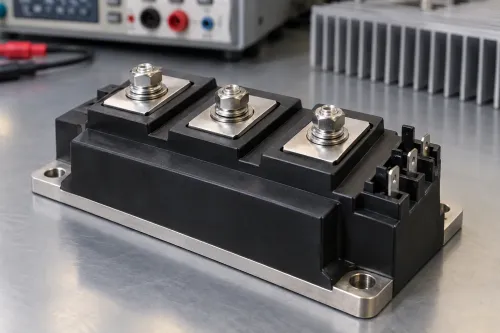
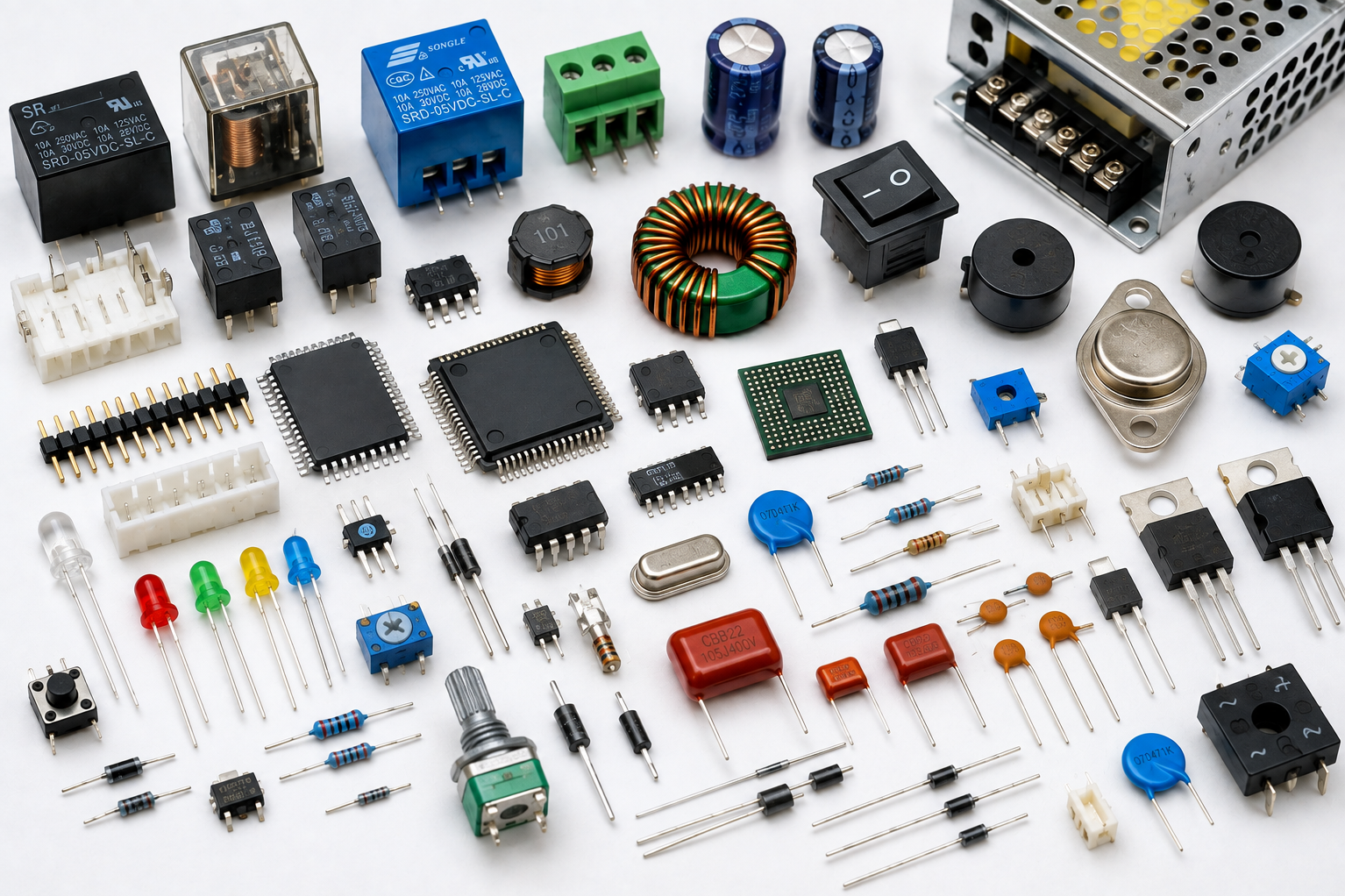
Choosing an electronic components manufacturer in Delhi is an important procurement decision for businesses that depend on consistent electronic assemblies. The impact extends beyond component pricing because specification mismatches, unsuitable substitutions or inconsistent components can affect production schedules and finished-product performance.
OEMs, automation companies, electronics manufacturers and industrial buyers should therefore evaluate potential providers using practical technical and procurement criteria.
Does the Manufacturer Cover Your Required Component Categories?
Start by assessing whether the company can support the types of components your business actually uses.
A broad industrial electronics requirement might include:
- Electronic components
- FPGA devices
- General purpose chip resistors
- Electronics Zener diodes
- Bipolar Transistors – BJT
- Integrated circuits
- Diodes and transistors
- Proximity sensors
- Inductive proximity sensors
- Capacitive proximity sensors
- Proximity switches
- Fiber optic amplifiers
Having access to multiple relevant categories can simplify procurement for companies building equipment containing both PCB electronics and automation sensing systems.
Can You Source According to Exact Specifications?
Generic product names are rarely sufficient for professional electronic component procurement.
Take a chip resistor as an example. Resistance value is only one parameter. Tolerance, power rating and package size may also determine whether it can be used in the circuit.
The same principle applies to proximity switches. Buyers may need to specify sensing technology, sensing distance, output type, operating voltage and mounting arrangement.
Technical specifications should always take priority over assumptions.
Is the Provider Suitable for Repeat Requirements?
Many electronics businesses begin with prototype quantities and later move to regular manufacturing.
Before finalizing a provider, consider how repeat component requirements will be handled.
Maintain internal records containing:
- Approved part numbers
- Manufacturer references where applicable
- Electrical specifications
- Package details
- PCB or machine application
- Previously approved alternatives
This documentation can reduce confusion when the same components are required again.
Why Local Relevance Matters in Delhi NCR
Delhi NCR has a diverse manufacturing environment covering industrial automation, electrical equipment, electronics assembly, machinery, instrumentation and embedded systems.
For local businesses, having a component provider familiar with industrial and electronics requirements can make communication around specifications and quantities more straightforward.
MAXGTECH operates as an electronic components manufacturer and provider in Delhi, supporting requirements across semiconductor, passive electronic and industrial sensing component categories.
Its relevance should ultimately be evaluated against the technical requirements of each buyer rather than simply by the number of products available.
Questions to Ask Before Placing an Order
Before finalizing a component requirement, ask:
- Does the part number match the approved requirement?
- Are the electrical specifications correct?
- Is the package or physical configuration compatible?
- Is the required quantity clearly confirmed?
- Has any proposed alternative been technically evaluated?
- Are recurring requirements likely to need the same specification?
These checks are particularly useful when components are being purchased for production rather than experimentation.
Build Procurement Around Specifications, Not Assumptions
Reliable electronics manufacturing depends on many small decisions, and component procurement is one of them.
A suitable electronic components manufacturer should be evaluated for relevant product coverage, technical compatibility and ability to support clearly defined industrial requirements.
For OEMs, manufacturers, automation businesses and procurement teams searching for an electronic components manufacturer in Delhi, MAXGTECH can support specification-based enquiries across electronic components, integrated circuits, semiconductors and industrial sensing products.