Diodes and transistors are fundamental semiconductor devices found throughout electronic equipment. Although they may appear straightforward compared with advanced integrated circuits, choosing an unsuitable device can affect switching behaviour, voltage handling, power dissipation and overall circuit reliability.
For industrial electronics manufacturers and engineering companies in Delhi, component selection should begin with the actual electrical conditions in which the diode or transistor will operate.
Understand the Function Before Selecting the Component
Diodes and transistors perform different roles.
A diode primarily controls current flow according to its electrical characteristics. Depending on the diode type, it may be used for rectification, protection, voltage regulation or signal-related applications.
Transistors can perform switching and amplification functions.
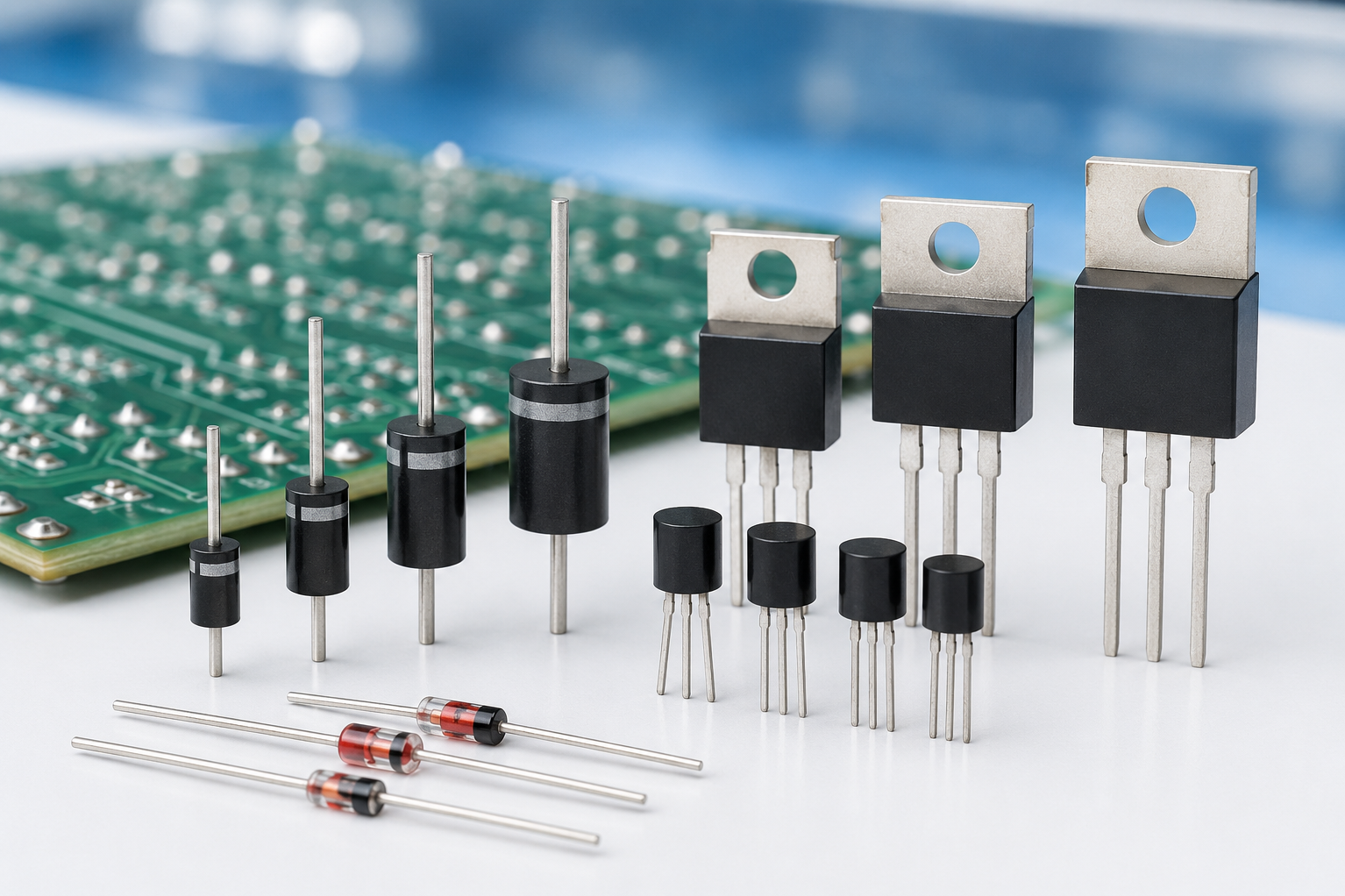
Common semiconductor categories include:
- Rectifier diodes
- Zener diodes
- Switching diodes
- Bipolar transistors – BJT
- NPN transistors
- PNP transistors
- Power transistors
The correct category depends on what the circuit needs to accomplish.
Check Voltage and Current Ratings
Voltage and current requirements are among the first specifications that should be evaluated.
A diode must be capable of handling the expected forward current and relevant reverse voltage conditions.
For a transistor, engineers need to evaluate parameters associated with collector current, voltage ratings and the intended switching or amplification conditions.
Components should be selected with appropriate consideration for actual operating conditions rather than simply matching nominal values.
Do Not Ignore Power Dissipation
Semiconductor devices generate heat during operation.
If the expected power dissipation is significant, thermal management becomes part of component selection. Depending on the application, this may involve package selection, PCB thermal design or additional heat dissipation arrangements.
Ignoring thermal conditions can affect performance and component life.
Verify Package and Pin Configuration
Physical compatibility is another important consideration, particularly when replacing an existing component.
Before approving a diode or transistor, verify:
- Package type
- Dimensions
- Pin configuration
- Mounting method
- PCB footprint
- Thermal requirements
Two transistors with broadly similar electrical specifications may have different pin arrangements, making direct replacement inappropriate.
Semiconductor Requirements for Delhi Manufacturers
Industrial electronics businesses across Delhi and Delhi NCR use diodes and transistors in control systems, power supplies, automation equipment, instrumentation and electronic assemblies.
MAXGTECH supports diode and transistor requirements for electronics and industrial applications in Delhi.
When requesting components, procurement teams should ideally provide an exact part number. Where an equivalent is being considered, the original datasheet and essential circuit requirements should be reviewed before making a substitution.
Use a Component Selection Checklist
Before finalizing a diode or transistor, confirm:
- What function does it perform?
- What voltage must it withstand?
- What current will it carry?
- What switching characteristics are required?
- What package fits the PCB?
- What are the thermal conditions?
- Is the proposed component electrically compatible?
A disciplined approach is particularly important for recurring production.
Manufacturers looking for diodes and transistors in Delhi can discuss specification-based requirements with MAXGTECH for industrial electronics, manufacturing and related applications. Clear technical information at the enquiry stage helps ensure that the selected component is aligned with the intended circuit and production requirement.