Electronic circuits often require stable voltage conditions to operate correctly. Unexpected voltage increases or poorly controlled supply levels can affect sensitive components and create reliability problems. A Zener diode provides a simple and widely used method of regulating or limiting voltage within many electronic circuits.
Understanding how an electronics Zener diode works can help designers and manufacturers choose the correct device for voltage regulation and protection applications.
What Is a Zener Diode?
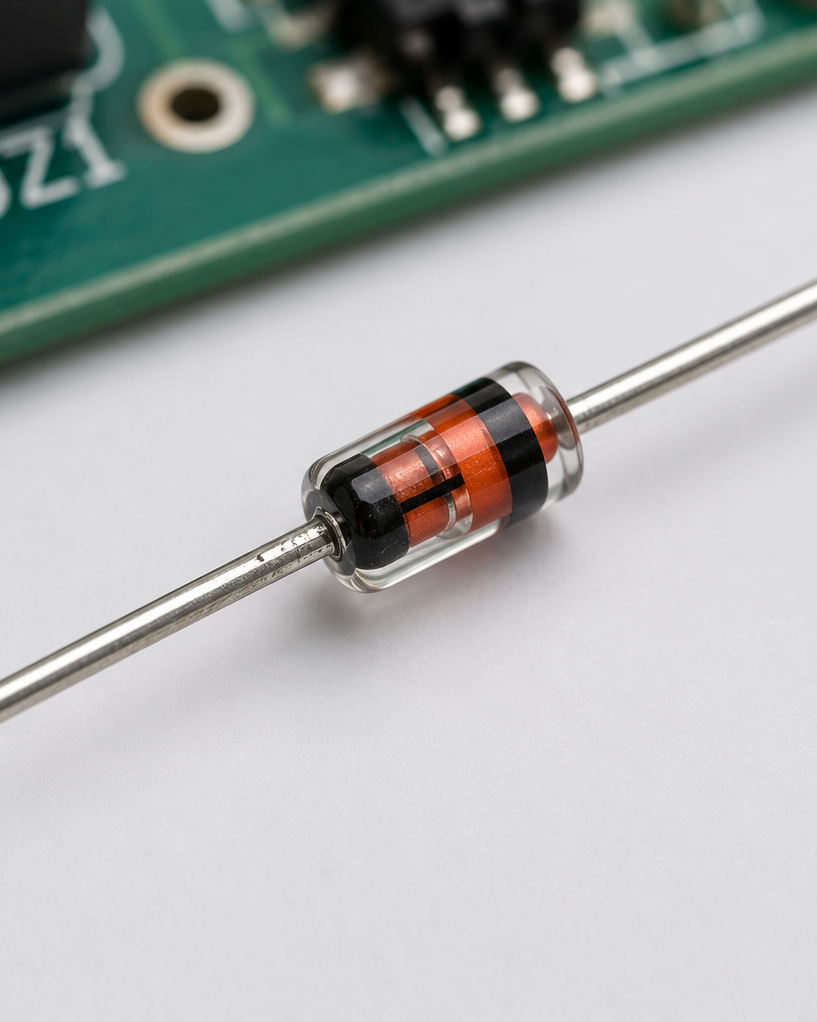
A Zener diode is a semiconductor diode designed to operate reliably in reverse bias after a specified voltage level, known as the Zener voltage, is reached.
A conventional diode is generally used to conduct current in one direction while restricting reverse current. A Zener diode is specifically designed so that controlled reverse conduction becomes useful within the circuit.
This characteristic allows it to maintain or limit voltage around a predetermined level when used in an appropriately designed circuit.
Where Are Zener Diodes Commonly Used?
Zener diodes can perform several useful functions in electronics.
Typical applications include:
- Voltage regulation
- Overvoltage limiting
- Reference voltage generation
- Protection of sensitive circuit sections
- Voltage stabilization
- Signal clipping and limiting
Their relatively simple operation makes them useful across many electronic product categories.
How Does Zener Voltage Affect Selection?
Every Zener diode is designed around a particular breakdown voltage.
For example, a circuit requiring one reference voltage cannot simply use a Zener diode with an arbitrary rating. The selected Zener voltage must correspond with the intended circuit conditions.
Engineers should also evaluate parameters such as:
- Zener voltage
- Power dissipation
- Zener current
- Voltage tolerance
- Dynamic resistance
- Package type
- Operating temperature
These factors influence how effectively the component performs under real operating conditions.
Common Selection Mistakes to Avoid
One frequent mistake is focusing exclusively on the nominal Zener voltage.
Power dissipation is equally important. If the component is required to dissipate more power than it is designed to handle, reliability can be affected.
Another issue is failing to account for tolerance. The actual breakdown characteristics may vary within the manufacturer's specified range.
Designers should therefore calculate the circuit conditions and refer to the relevant technical specifications rather than treating all Zener diodes with similar voltage ratings as interchangeable.
Zener Diode Applications in Delhi's Electronics Industry
Electronics businesses throughout Delhi and Delhi NCR use semiconductor components in industrial control equipment, power electronics, instrumentation, embedded products and other electronic assemblies.
MAXGTECH operates within the electronic component manufacturing and supply segment in Delhi, supporting requirements that include Zener diodes and related semiconductor components.
For production-oriented buyers, component consistency is particularly important. A replacement part should be evaluated for electrical and physical compatibility before being introduced into an established PCB design.
Small Component, Important Circuit Function
A Zener diode is relatively straightforward compared with many advanced semiconductor devices, yet it can perform an essential role in controlling voltage conditions.
Correct selection begins with understanding the circuit rather than simply identifying a part number. Zener voltage, current requirements, power dissipation, tolerance and operating conditions should all be considered.
For electronics designers and manufacturers in Delhi, careful Zener diode selection can contribute to better voltage management and more dependable electronic circuit design.